
Free, photo-documented inspections
If a storm damaged your roof or water is coming in, get everyone safe, then call us at (410) 599-6239 — we take after-hours emergency leak calls. We protect the roof from more water, inspect it fully, make a permanent repair and give you photo documentation for your insurance claim.
Maryland storms are hard on roofs. Summer thunderstorms bring sudden gusts and downpours, nor’easters push rain sideways for hours, and heavy wet snow brings down tree limbs. A few lifted shingles or a torn flat-roof seam lets water reach the decking, insulation and ceilings below.
Storm damage is also easy to miss from the ground. Wind can crease shingles or break the seal strip that holds them flat. Flashing, the metal that seals the roof around chimneys and walls, can pull loose. A limb strike can crack decking under shingles that still look fine. Openings like these tend to leak in the next heavy rain, so have the roof checked after a bad storm even if nothing is dripping yet.
Owner Anthony Hill brings 30+ years of roofing experience to shingle, flat and slate roofs around Baltimore. We work in order: keep more water out, find everything the storm damaged, then repair it the right way. We photograph what we find along the way, so you have a clear record for your insurance company and your own files.
Warning signs
Signs of storm damage to look for
-
Missing or lifted shingles
Shingle pieces in the yard, bare spots on the roof, or tabs that flap or stick up after high wind.
-
New stains or active drips
Brown rings on ceilings, wet spots on walls, or water around light fixtures and window tops after rain.
-
A tree limb hit the roof
Even if the branch rolled off, the impact can crack decking or break shingles along the strike.
-
Loose flashing or vents
Bent metal at the chimney, walls or roof edge, or a pipe boot or vent cap knocked out of place.
-
Damaged gutters or flat-roof seams
Gutters pulled away from the fascia, or split, blistered or peeled seams on a flat roof.
Scope of work
What storm and emergency repair includes
- After-hours emergency leak calls
- Temporary protection, such as tarping, to keep water out until the permanent repair
- A full inspection of shingles or membrane, flashing, vents, gutters and the attic
- Photo documentation of the damage to share with your insurance company
- A free estimate for the permanent repair, with options explained in plain language
- Permanent repair of shingles, flashing, decking, membrane or gutters, plus cleanup
Materials
Materials for temporary and permanent repairs
-
Tarps and temporary patches
Heavy tarps secured over damaged areas, or patching on flat roofs, to keep water out for the short term.
-
Replacement shingles
Asphalt shingles matched as closely as possible in color and profile to the rest of your roof.
-
Decking, underlayment and ice & water shield
New plywood where the deck cracked or softened, with underlayment and self-sealing ice & water shield at edges, valleys and vents.
-
Flashing and pipe boots
Step flashing, drip edge and rubber pipe boots replaced where wind or debris bent or tore them loose.
-
Flat-roof membrane
EPDM rubber, TPO or modified bitumen repairs that match the system already on your roof.
Our process
What happens after you call
-
Get safe, then call us
Stay off the roof and away from downed wires. If water is reaching lights, outlets or the electrical panel, keep clear and call an electrician. Then call BRC.
-
Temporary protection
When it is safe to work on the roof, we tarp or seal the damaged area to keep more water out until the permanent repair.
-
Full inspection
Once the weather clears, we check the whole roof, not just the spot that leaked: shingles, flashing, vents, decking, gutters and the attic.
-
Photos and estimate
We walk you through photos of the damage and give you a free estimate. The photos are yours to share with your insurance company.
-
Permanent repair
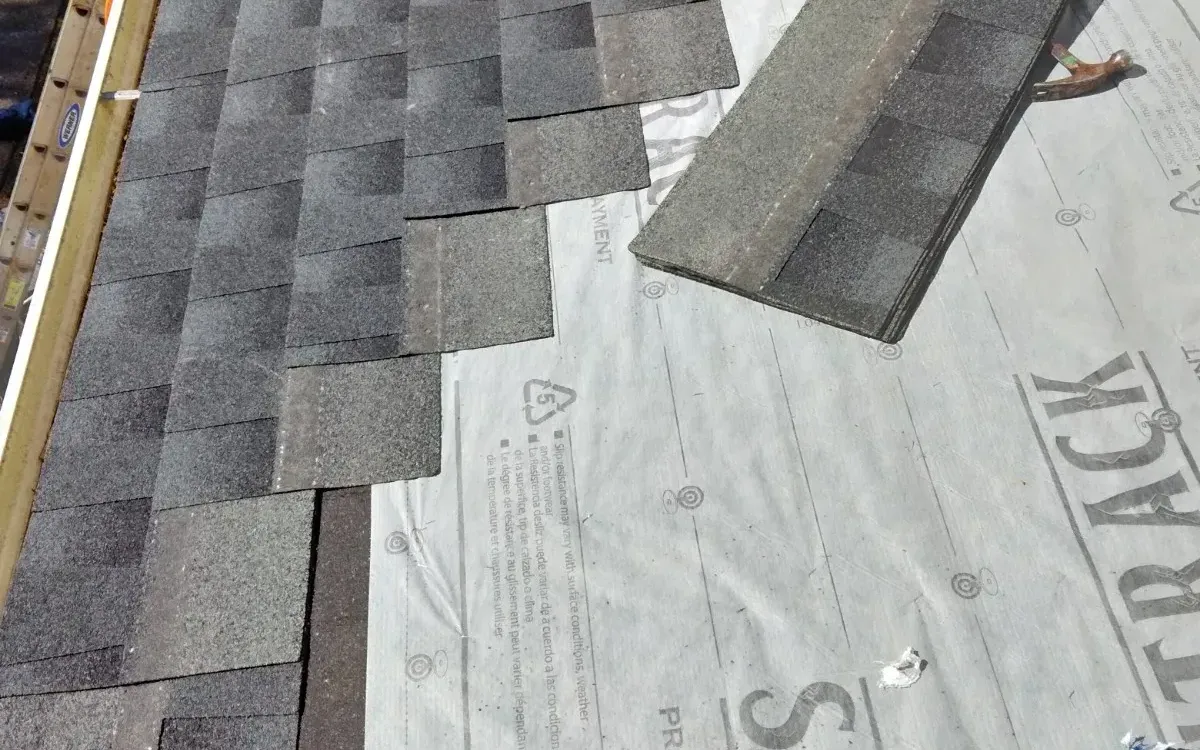
We replace what the storm damaged, match your existing materials as closely as we can, and clean up when the work is done.
Local know-how
How Baltimore-area storms hit roofs
-
Nor’easters and summer thunderstorms
Nor’easters drive rain sideways in the cooler months, and summer thunderstorms bring strong gusts and heavy rain in a short burst. Both test weak flashing and lifted shingles.
-
Mature trees near the house
Older neighborhoods across Baltimore County and Baltimore City often have large trees close to homes, so limb strikes and clogged gutters are common after big storms.
-
Rowhome flat roofs in Baltimore City
Storm water on a rowhome roof has to reach a scupper or downspout. When debris blocks it, water ponds against the parapet walls you share with neighbors, where flashing is most likely to leak.
-
Permits for bigger repairs
Larger storm repairs, such as replacing a large share of the roof deck, may need a building permit depending on where you live. We check requirements before that work starts.
Based in Pikesville, serving Baltimore County, Baltimore City and Howard County.
See the areas we serveYour estimate
What affects the cost
Every project is different, so we don’t list prices online. We look at the job first and give you a free estimate based on what we find.
- How much of the roof was damaged and whether the decking underneath is affected
- Roof type: asphalt shingle, flat membrane, slate or metal
- Roof height, pitch and how safely it can be reached
- Whether temporary protection is needed before the permanent repair
- Matching older shingles or materials that are no longer made
FAQ
Storm damage questions
What should I do first if my roof is leaking during a storm?
Stay off the roof and keep people away from sagging ceilings and wet electrical fixtures. Move belongings, catch drips in buckets, take photos, and call us at (410) 599-6239.
Do you take emergency calls after business hours?
Yes. We take after-hours emergency leak calls, and when it is safe to work on the roof we put temporary protection in place until a permanent repair can be made.
Can you document storm damage for my insurance company?
Yes. We photograph the damage and the areas we inspected, so you have a clear record to share with your insurance company. Your insurer decides what your policy covers, so talk with them about your claim.
Is a tarp a permanent fix?
No. A tarp or temporary patch only keeps water out for the short term. Damaged shingles, flashing or decking still need a permanent repair, and waiting raises the chance of hidden water damage.
My roof looks fine after the storm. Should I still have it checked?
If you had high wind, hail or a limb strike, it is worth a look. Wind can break shingle seals and loosen flashing without obvious signs from the ground, and our inspections are free.
Keep exploring
Related services
Need a roofer you can trust?
Book a free, no-pressure roof inspection. We’ll show you photos of everything we find.
- MHIC No. 92337
- Licensed & insured
- GAF Certified contractor